
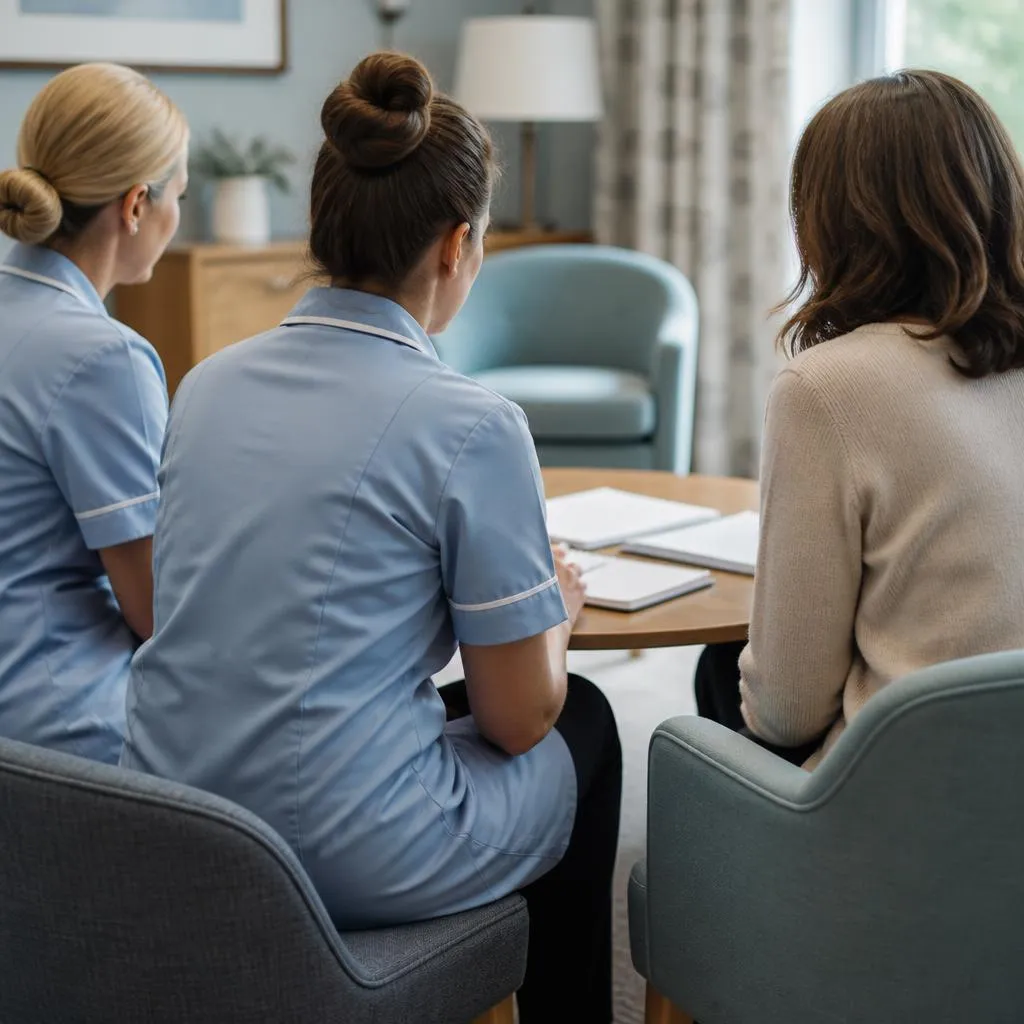
Our approach to good end-of-life care
The resident remains at the centre. Clinical care must remain safe and lawful, while relatives are appropriately informed, involved and supported.
Good end-of-life care requires a delicate balance of compassion, clinical expertise, and clear communication. We structure our approach by looking at care through three essential perspectives.
Everything begins with the individual. We focus on protecting their comfort, dignity, and personal identity. We support their right to choice and to maintain meaningful relationships. Understanding their specific wishes, alongside their cultural and spiritual needs, dictates how care is delivered day to day.
The nursing team provides continuous oversight through regular nursing assessment and responsive care planning. This includes rigorous monitoring, prompt symptom escalation, and coordination with external professionals. We ensure appropriate equipment is in place and that medicines prescribed by authorised clinicians are administered safely. Crucially, we review all care as the resident's needs change over time.
Families need clear information, honest communication, and appropriate involvement in decision-making. We aim to provide reassurance and emotional support, helping families prepare for changes in health and offering sensitive support into bereavement.
Guiding principles
Our approach is informed by relevant NICE guidance and Gold Standards Framework principles.